
Property management in Lyon: why rental strategy matters more than portfolio size
A furnished rental strategy in Lyon starts well before you set the rent or choose between short and medium-term stays. It means looking at tenant demand, running costs, local rules and what the owner wants from the property over the long term.
Does a flat that brings in more rent necessarily make its owner more money? Does an agency earn more simply because it manages more apartments?
In both cases, the answer is not necessarily.
Rent collected and revenue tell only part of the story. Profitability also depends on costs, length of stay, the time a property stands empty and how well the day-to-day work is organised.
For several years, 2BeApart has developed its furnished property management business in Lyon around one aim: to grow its portfolio while maintaining the quality of its service.
That raises a practical question for us. How can we create more value for owners while keeping the agency profitable?
Saint-Martin, a 219 m² apartment near Place Bellecour, recently joined our portfolio. It offers a concrete example of how we make those decisions.
1. Higher rent does not guarantee a better return
As an owner, it is tempting to compare ways of letting a property by looking at the rent alone.
Take a deliberately simple example.
An apartment might earn €3,000 a month from short stays and incur €900 in variable costs associated with those stays.
That leaves €2,100 before other expenses and tax.
Let for longer stays, the same apartment might bring in €2,500 over a month, with just €300 in variable costs.
The income left after those costs would be €2,200.
The option with the highest revenue can leave the owner with less money.
These figures are illustrative. Actual costs depend on who pays which expenses under the agreement, how often guests change over, booking commissions and which services the rent covers.
A comparison also needs to allow for gaps between bookings, upkeep, fixed expenses and tax.
Compare net income over the same period, using assumptions that reflect how the apartment will actually be let.
2. How do you build a profitable furnished rental strategy?
Before choosing whether to let an apartment by the night, week or month, it is worth asking five questions.
Who is likely to rent this particular home?
A studio in a central neighbourhood may appeal to quite different tenants from a 150 or 200 m² apartment.
The studio might suit visitors on short stays. The larger home might appeal to a family between homes, someone relocating to Lyon or an employer arranging accommodation for staff.
Size alone does not determine demand. Location, equipment, comfort and price matter too.
What length of stay fits that demand?
Short stays give owners considerable flexibility on price, but usually mean more changeovers.
Medium-term lets can reduce some of that work and make occupancy easier to forecast.
Their profitability still depends on the rent, demand, expenses and the time tenants actually spend in the property.
Look at a sufficiently long period. A handful of nights booked at a particularly good rate can give a misleading picture.
Which local rules apply?
In Lyon, owners cannot assume that every furnished home can be used interchangeably for short or medium-term lets.
The property’s circumstances, change-of-use rules, the building’s co-ownership rules and the proposed lease all need to be considered.
A rental strategy only makes commercial sense if the intended use is legally suitable for the property.
What does it actually cost to run the apartment?
Include cleaning, laundry, upkeep, maintenance call-outs, booking commissions and administration.
Some costs rise with the number of stays. Others remain fairly stable.
This is one reason why the length of each stay can materially affect profitability.
What does the owner want from the property?
Different owners have different priorities.
Some want a steady income. Others want to use the apartment themselves, limit wear and tear, prepare for a sale or move back in later.
The right rental strategy brings together the characteristics of the home, local demand and the owner’s long-term plans.
3. The agency’s profitability is part of the equation
The owner’s figures are only one side of the calculation.
For a property management agency, each new instruction brings in revenue and adds costs.
An apartment outside the areas the team normally covers can absorb a great deal of time, particularly if it requires frequent journeys or complex work on site.
A well-located flat that suits its tenants and fits the existing operation can make a greater contribution to the agency’s overall profitability.
Three figures help explain the difference.
Revenue is the income the activity generates.
Contribution margin is what remains after deducting the costs directly attributable to that activity.
Profit also takes overheads and the agency’s other expenses into account.
A new management contract can add to revenue without producing a proportional increase in profit.
This affects which homes an agency takes on. Alongside the number of properties it manages, it needs to consider which ones its team can run effectively.
That does not mean routinely favouring the contracts that pay the agency most.
For the arrangement to last, the owner needs to see a clear benefit and the agency needs to maintain its service standards and cover its costs.
4. Why day-to-day operations matter
In our work, listings and pricing policies are only part of what determines service quality.
How the team organises its work each day matters just as much.
An apartment must be clean, well maintained, properly equipped and available when its occupants have been promised it.
For several years, 2BeApart has employed its own cleaning teams and run its own laundry, while managing lettings, marketing and maintenance locally.
This helps us coordinate visits, check the quality of the work and keep track of costs.
Bringing services in-house also creates commitments.
Staff, equipment, premises, supervision and coordination all carry significant fixed costs.
Bringing an activity in-house does not automatically make it cheaper or more profitable.
Its value depends on the volume of work, productivity, the quality of the management and how effectively the available resources are used.
An agency that wants to grow needs an operation that can take on more homes without its day-to-day problems growing at the same rate.
One principle guides the way we work.
Standardise the work behind the scenes so that each apartment can be managed on its own terms.
5. Saint-Martin: a rental strategy for a 219 m² apartment
Saint-Martin recently joined our portfolio of furnished apartments in Lyon.
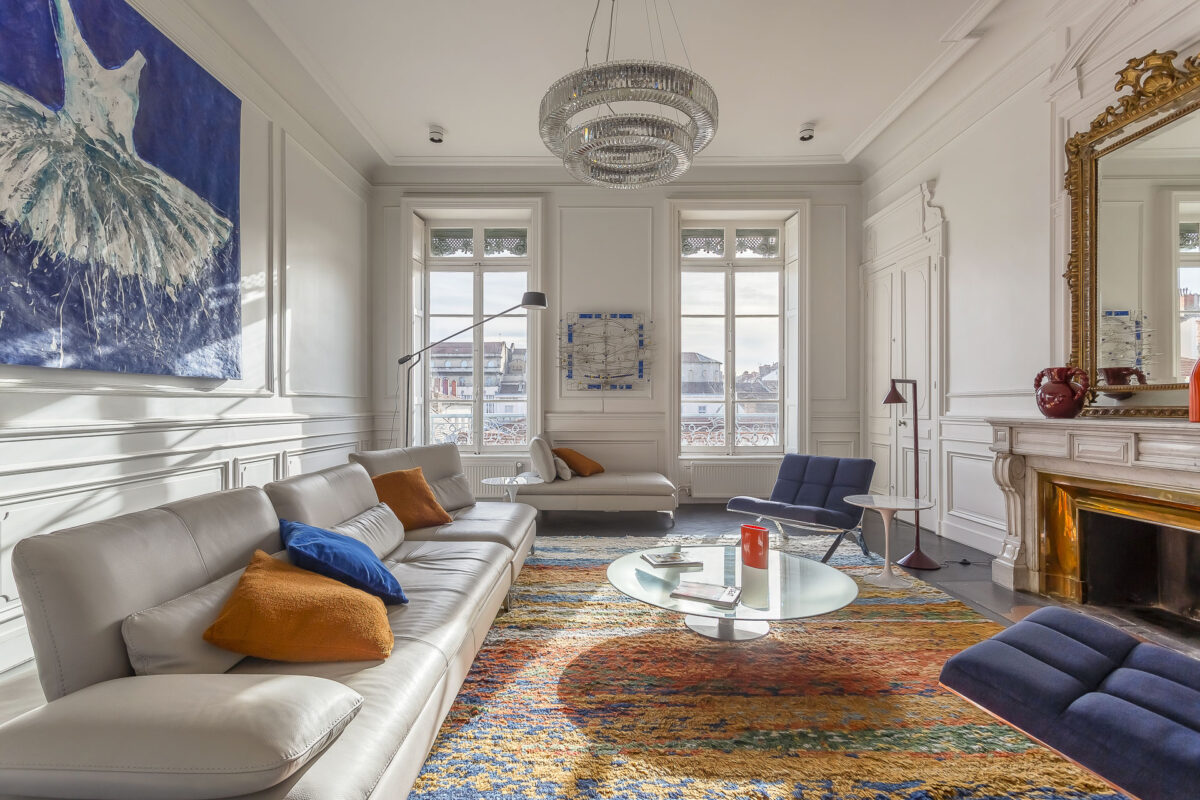
The 219 m² apartment is on Rue Sala, near Place Bellecour, on the third floor of a 19th-century building with a lift.
It has three bedrooms, two bathrooms, generous living spaces, a view of Fourvière and private parking.
These features give it a different market from a studio aimed mainly at short stays.
It could suit an expatriate family, someone relocating or a business client looking for a high-quality temporary home.
We therefore offer Saint-Martin as a furnished apartment to rent by the month.
Floor area and high-quality amenities alone do not guarantee a financial return.
We still need to find tenants whose budgets match the property, choose the right channels to reach them, set a realistic rent and control running costs.
For certain tenants, everyday comfort, somewhere to work, well-chosen equipment and a parking space are particularly important in a home of this size.
The rental strategy starts with matching what the apartment offers to what tenants actually need.
That is the thinking behind our decision to add Saint-Martin to the portfolio.
Explore Saint-Martin, a 219 m² furnished apartment in Lyon’s 2nd arrondissement
6. Growing a portfolio while maintaining quality
Since it was founded in 2008, 2BeApart has developed a furnished property management business in Lyon that combines short and medium-term lettings, marketing, advice for owners and an integrated local operation.
Our work goes beyond handling guests’ day-to-day needs.
For each home we consider how it should be let, where it fits in the market and what it will take to manage it well over time.
That means making choices.
Some apartments are a better fit for our model than others. Management contracts also differ in the financial contribution they can make and the work they require.
A portfolio concentrated in neighbourhoods we know, with homes suited to our tenants, can be more resilient than a larger portfolio spread across many areas.
Choosing properties carefully also helps protect service quality and our team’s working conditions.
Saint-Martin illustrates that approach to growth. It is precisely the kind of apartment whose characteristics deserve a carefully considered rental strategy.
Growth means selecting the right homes, managing them well and turning the additional work into lasting value.
That conviction has guided 2BeApart’s development for several years.
Do you own a furnished apartment in Lyon?
The City of Lyon’s official website sets out the change-of-use rules for homes intended for tourist lettings.
2BeApart helps owners work through these decisions and manages their homes day to day.
Explore our approach to furnished property management in Lyon.